When you're choosing cabinets, the doors get all the attention. But the part that determines how long your cabinets last is the part you rarely see: the box, or carcass. And the two most common materials for that box — plywood and furniture board — get argued about constantly, often with more heat than accuracy. Here's a straight, shop-floor take.
First, the thing that matters more than the material
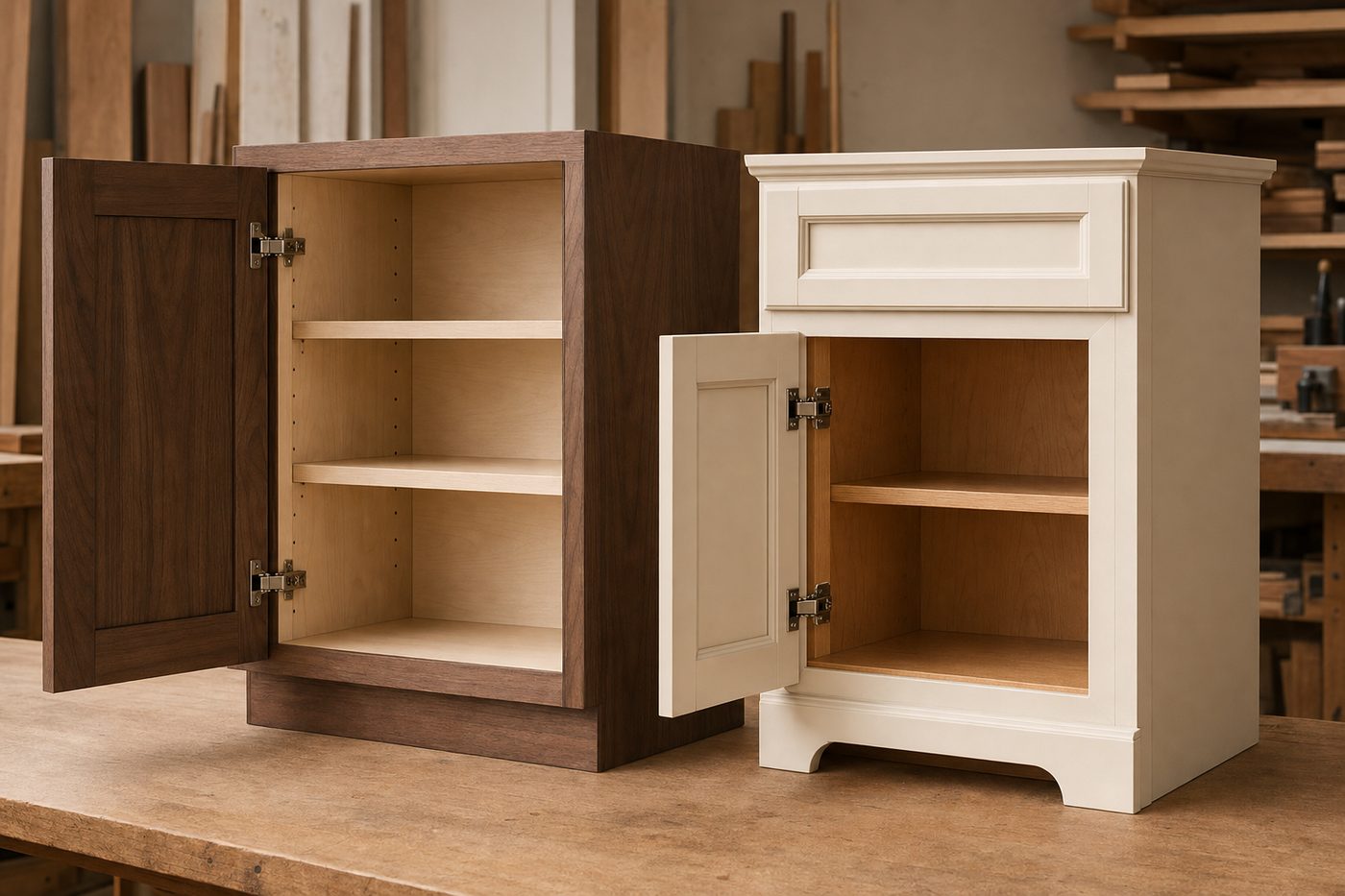
Before plywood versus furniture board, there's a bigger question: how thick is the box? We build on full 3/4-inch boxes rather than the thinner 1/2-inch cases some cabinets are built with. That thickness is what holds your hinges and slides securely, keeps the cabinet square over time, and carries the weight of stone countertops and full drawers without sagging. A thin box in a "premium" material is still a thin box.
Plywood cabinet boxes
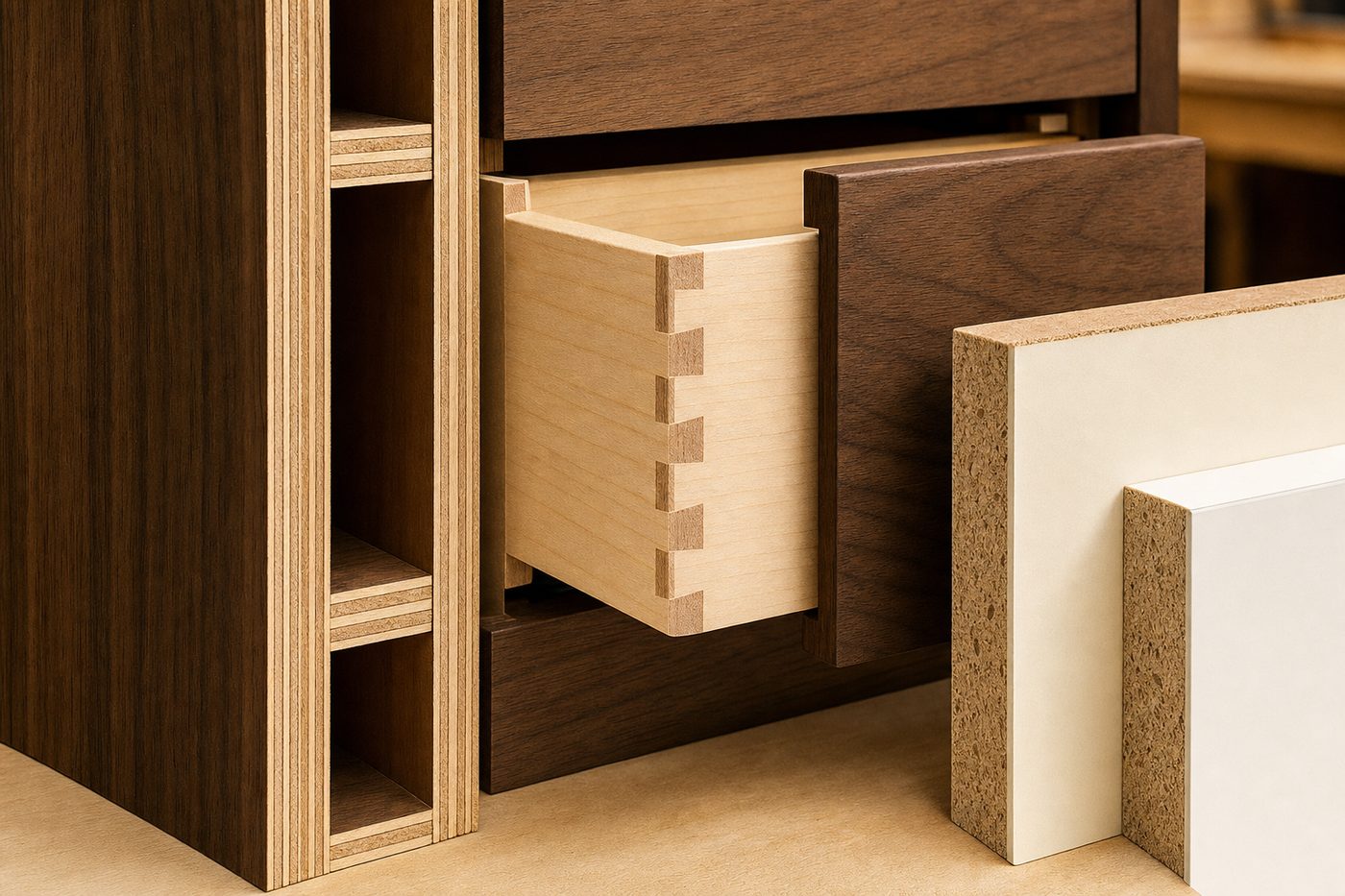
Plywood is made of thin wood veneers glued in alternating grain directions. That cross-grain construction gives it a few real strengths:
- Lighter weight — easier to handle and hang, which matters for large uppers.
- Excellent screw-holding — the layered structure grips fasteners well.
- Better with moisture — quality plywood tolerates humidity and the occasional spill better than raw particle-based panels, which is why it's popular under sinks.
The trade-offs: good cabinet-grade plywood costs more, and its face isn't always perfectly flat, which can matter for certain finishes.
Furniture board cabinet boxes
Furniture board is an engineered panel — dense, consistent, and extremely flat. Don't confuse it with the cheap particle board from flat-pack furniture; cabinet-grade furniture board is a different animal. Its strengths:
- Dead flat and stable — no warping or grain telegraph, which makes it ideal under laminate, PET, TFL, and painted finishes.
- Takes finishes beautifully — the smooth, uniform surface is exactly what you want for a crisp modern look.
- Cost-effective — it delivers a premium finished result without the plywood premium.
The trade-offs: it's heavier, and it needs to be built thick and edge-banded well to perform — which comes back to that 3/4-inch box.
So which should you choose?
Here's how we think about it on real projects:
- Modern flat-panel or painted kitchens? Furniture board's flatness gives you the cleanest finished surface.
- Under-sink cabinets or high-moisture areas? Plywood's moisture tolerance earns its keep.
- Weight-sensitive tall or wide uppers? Plywood's lighter weight helps.
Often the best answer is a mix — using the right material where it performs best. What never changes is the thickness and the build quality. Get those right and either material will serve you for decades.
Not sure what's right for your kitchen? We'll walk you through the options for your specific project across Denver Metro and Northern Colorado.
Thinking about a project?
Knack Woodcraft builds custom cabinetry and millwork across Denver Metro and Northern Colorado. Tell us what you have in mind and we'll get back to you within one business day.
Request a Free Quote