It's the first question almost everyone asks, and it's the hardest to answer in one number: what do custom cabinets cost? The honest answer is that a good custom cabinet quote is built the same way the cabinets are — to your exact space, your materials, and your hardware. But "it depends" isn't very helpful, so let's break down what actually moves the price, so you can read any quote you get with a sharper eye.
Why custom costs more than stock — and when it's worth it
Big-box and stock cabinets come in fixed sizes. When they don't fit your walls (and they rarely do perfectly), the gaps get covered with filler strips. Custom cabinetry is built to your real dimensions, which means no wasted space, no awkward fillers, and storage designed around how you actually use the room.
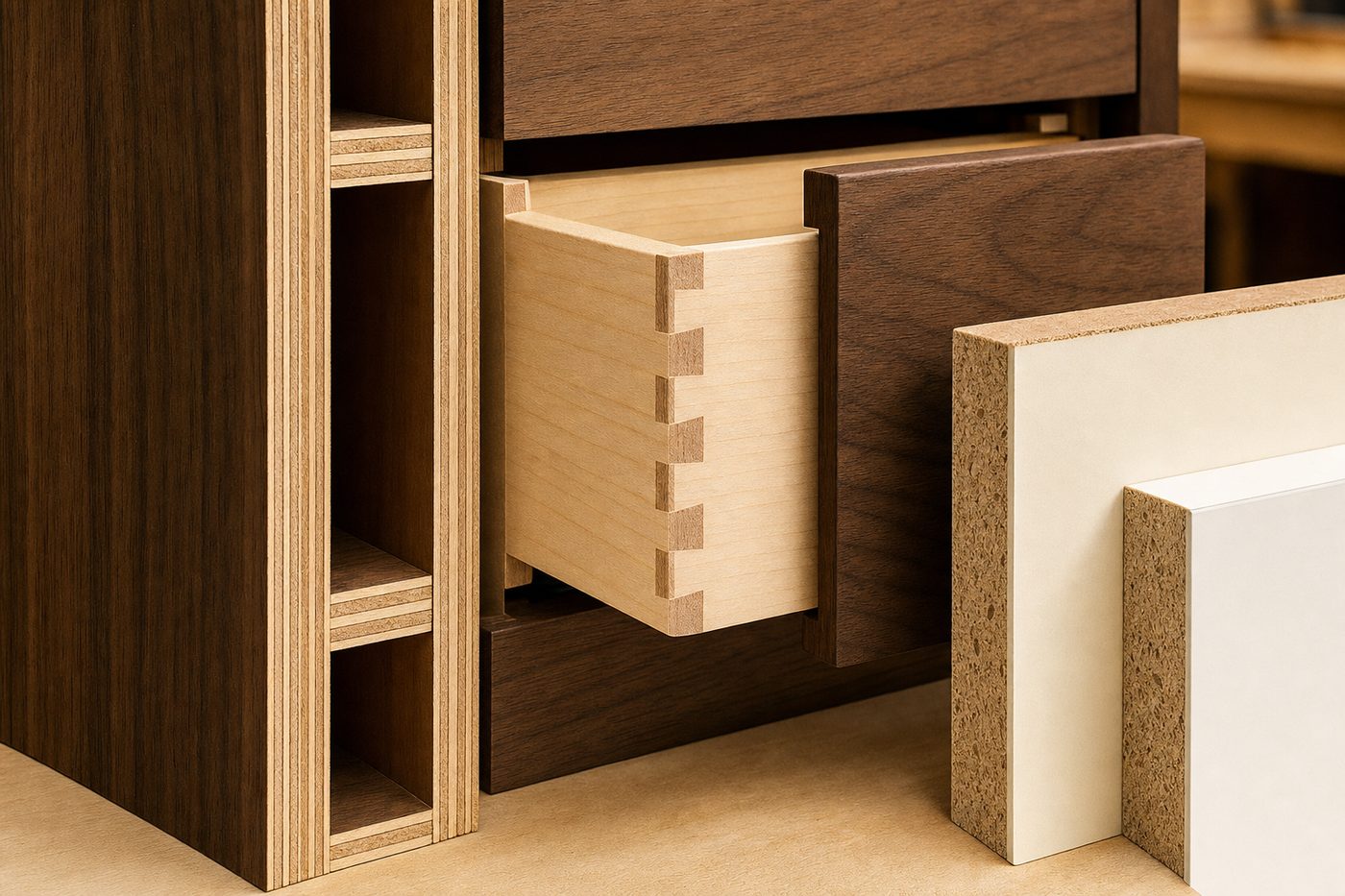
You're also paying for construction that lasts. At Knack Woodcraft, we build on full 3/4-inch boxes rather than the thinner 1/2-inch cases some cabinets are built with. That extra material is stronger, holds hardware better, and stands up to decades of daily use. It's the kind of difference you don't see on day one but absolutely feel in year fifteen.
The five things that drive your price
1. The size and layout of the project
More linear feet of cabinetry means more materials and more labor. A galley kitchen and a large kitchen with an island are very different numbers. Complex layouts — angled runs, tall pantry walls, custom range hoods — add to both.
2. Box (carcass) material
Your cabinet boxes can be built from plywood or furniture board. Each has its place, and the choice affects both cost and performance. (We break this down in our plywood vs. furniture board guide.)
3. Door style and finish
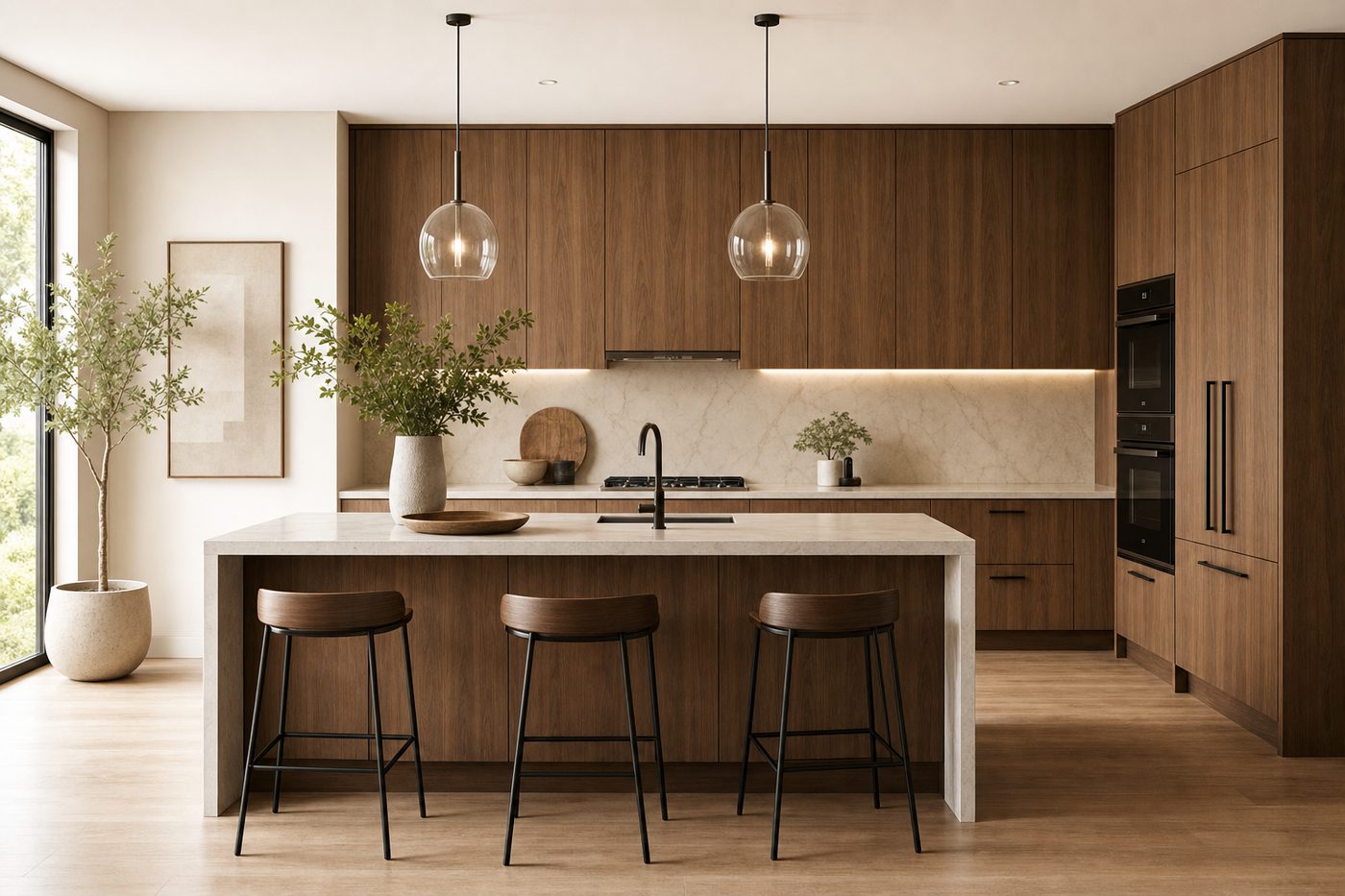
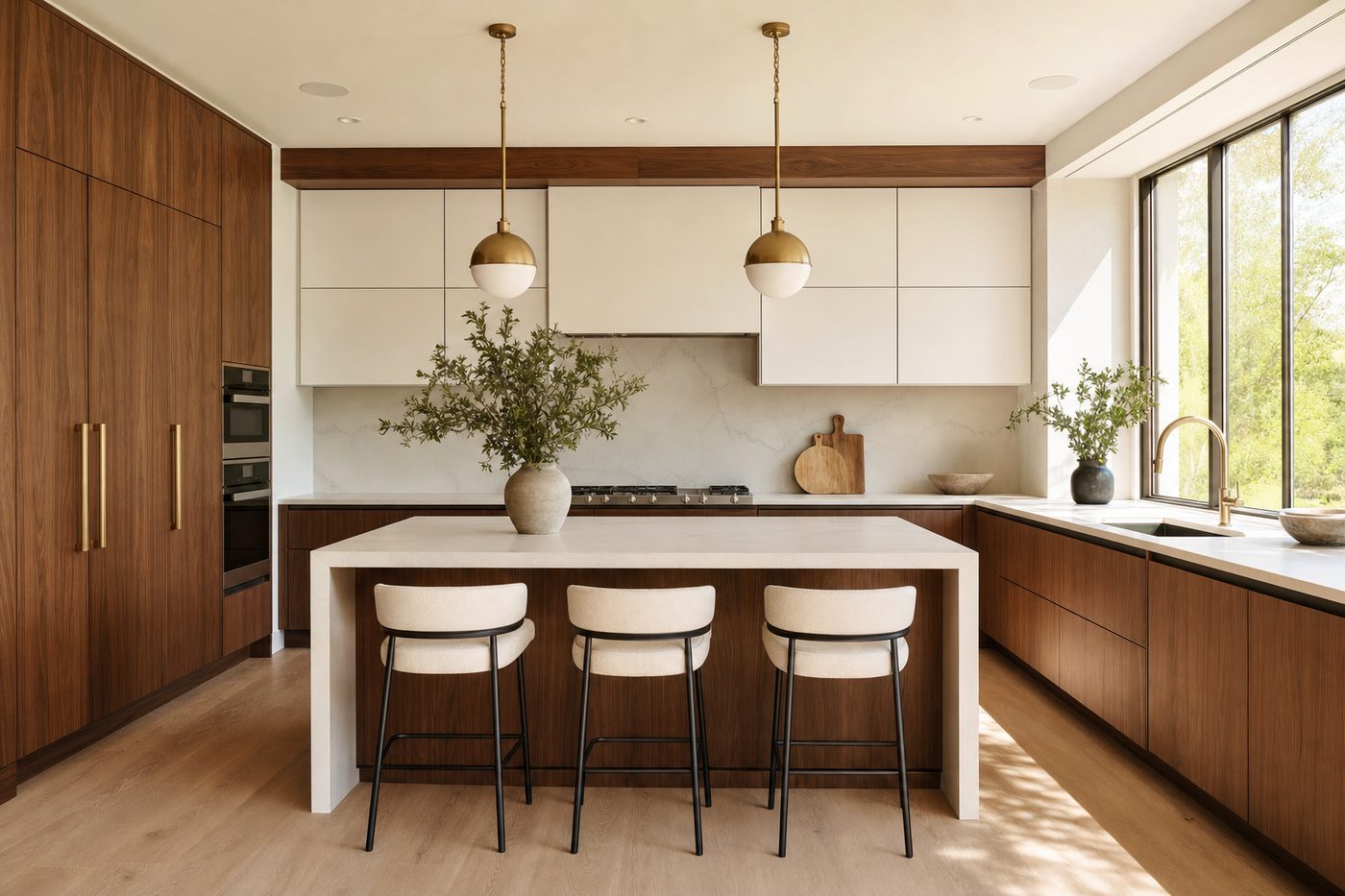
A simple flat-panel door in a durable PET or TFL finish is priced differently than a painted five-piece door or a natural wood veneer. Finish is often where budgets swing the most.
4. Drawers and hardware
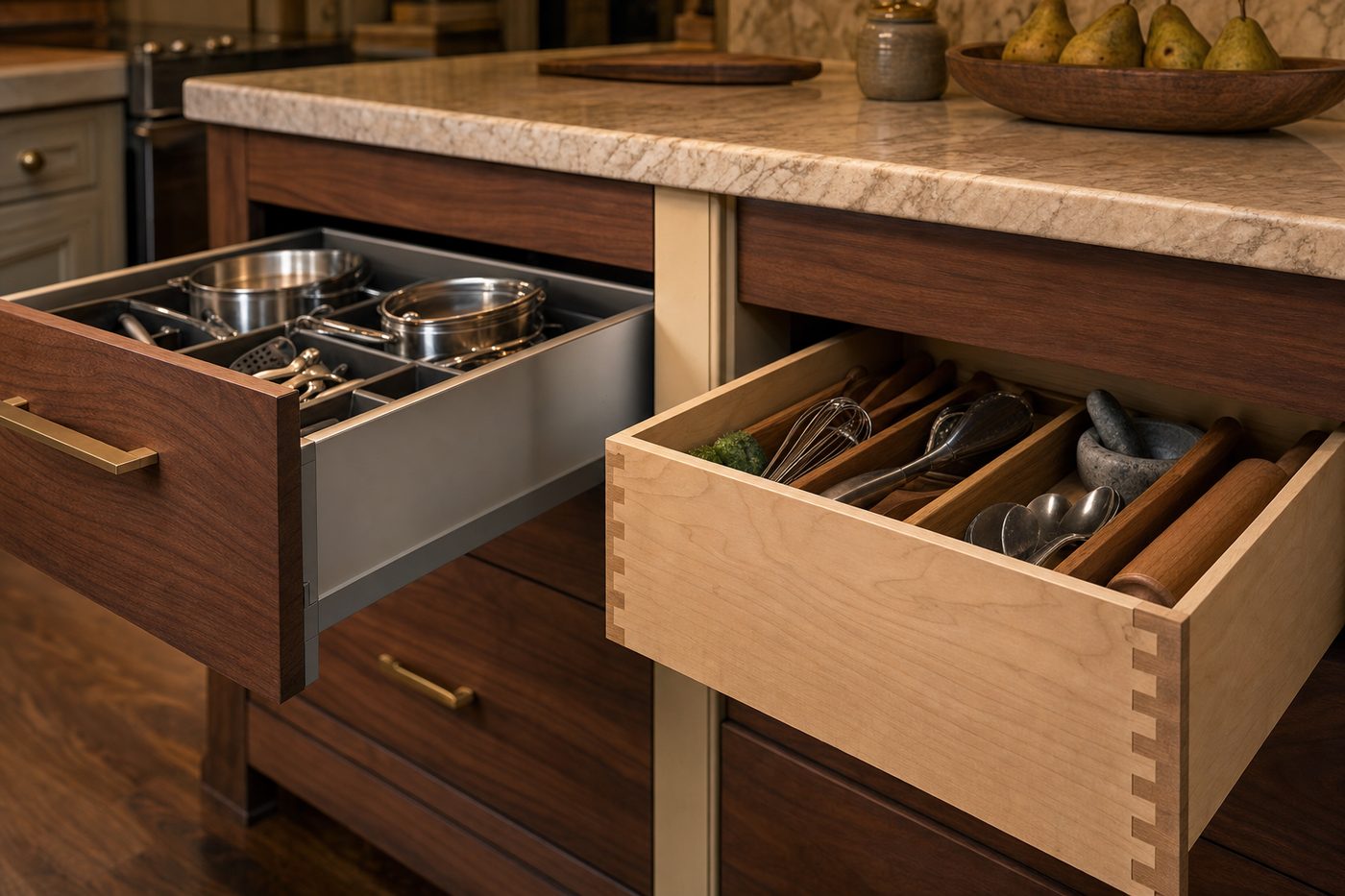
Drawers are a real cost lever. You can go with a sleek metal Euro drawer system or a solid maple dovetail box — both excellent, but different in feel and price. Add in soft-close hardware, pull-outs, and organizers, and it adds up. (More in our drawer comparison.)
5. Install complexity
An old home with out-of-square walls, a tricky access path, or a tight timeline all affect labor. A clean, well-prepped site installs faster than a gut job.
How to compare two cabinet quotes fairly
The lowest number on a page is not always the best value. When you're comparing bids, look past the total and ask:
- What's the box thickness and material? A 1/2-inch box and a full 3/4-inch box are not the same product.
- What drawer system and hardware are included? Soft-close should be standard, not an upsell surprise.
- Is the quote itemized? A clear, line-by-line quote means you can see exactly what you're paying for — and what you're not.
- Who's doing the install? Beautiful cabinets installed poorly won't look beautiful for long.
The bottom line
Custom cabinets are an investment, and the right shop will make that investment obvious in the quote itself — clear materials, clear construction, clear pricing. If a number seems too good to be true, it's usually because something got thinner, lighter, or left out. We'd rather show you exactly what goes into your project so the price makes sense.
Serving Denver, Fort Collins, Loveland, Windsor, Greeley, and the rest of the Front Range, we're happy to walk you through a detailed, itemized quote for your space.
Thinking about a project?
Knack Woodcraft builds custom cabinetry and millwork across Denver Metro and Northern Colorado. Tell us what you have in mind and we'll get back to you within one business day.
Request a Free Quote